
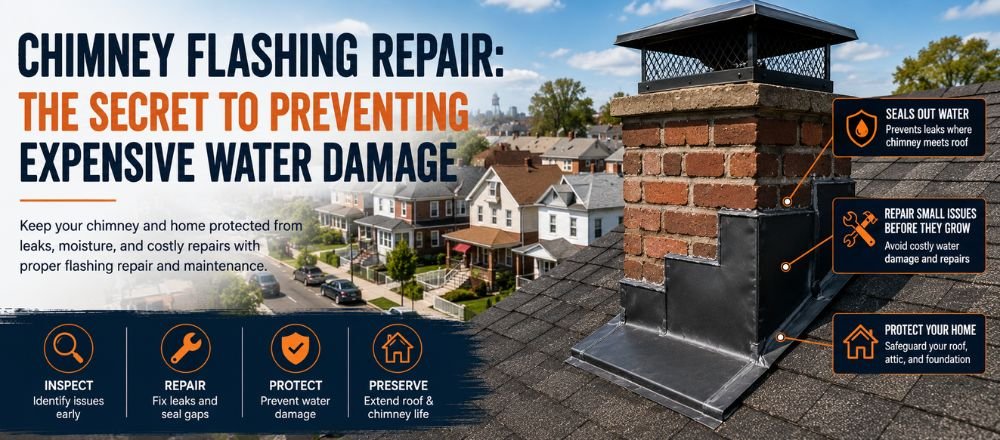
Your roof is meant to keep the rain, snow and moisture outside where it belongs. One place that is particularly susceptible to water intrusion is where your chimney meets your roof.
Enter the chimney flashing. Even though it’s a relatively small part of the roof, chimney flashing is critical in protecting your home from water damage. If it is damaged or improperly installed or just worn out over time, water can seep into your roof and walls, causing expensive repairs that could have been avoided.
Whether you’re fixing a chimney flashing leak, getting ready to replace your roof, or simply want to know how your roof stays watertight, this guide covers everything you need to know about chimney flashing repair, replacement, installation, and maintenance.
Chimney flashing is a waterproof barrier installed at the point where the chimney meets the roof. A chimney extends through the roofing system, leaving openings where rainwater can easily enter. Flashing seals these vulnerable areas and channels water safely down the roof instead of allowing it to leak under the shingles.
High-quality flashing doesn’t last forever. The system can weaken over time due to weather and temperature changes. The most frequent reasons for chimney flashing leaks are the following:
The earlier you spot flashing problems, the less expensive the repairs tend to be. If you have any of these problems, you should schedule chimney flashing repair as soon as possible to avoid structural damage.
| Factor | Chimney Flashing Repair | Chimney Flashing Replacement |
|---|---|---|
| Best for | Minor damage, loose flashing, or deteriorated sealant | Extensive rust, cracks, or widespread damage |
| Common Issues Addressed | Small gaps, lifted flashing, missing fasteners, sealant failure | Improper installation, severely corroded metal, multiple leaks |
| Work Involved | Resealing joints, securing flashing, replacing small sections | Removing the old flashing and installing a completely new flashing system |
| Time Required | Usually completed within a few hours | Typically takes a full day, depending on roof complexity |
| Cost | Lower upfront cost | Higher initial investment but greater long-term value |
| Lifespan After Service | Depends on the condition of the existing flashing | Offers a fresh lifespan based on the material installed |
| Recommended When | Damage is localised, and the flashing is structurally sound | Flashing has reached the end of its lifespan or recurring leaks persist |
Chimney flashing may not be the most visible part of your roofing system, but it’s one of the most important. Its job is simple, to keep water out. When that protection fails, the results can be roof leaks, mould growth, damaged insulation, rotted wood and costly interior repairs.
The good news is that most of the problems are preventable. Regular inspections, timely chimney flashing repairs, and professional maintenance can greatly extend the life of your roof.
If you’ve seen signs of a chimney flashing leak don’t wait until small moisture issues turn into significant structural damage. A timely inspection today could save you thousands in repairs tomorrow.