
So your mason (or your gut) says the chimney needs more than a patch job. Perhaps one side has a crack in it. Or the top few rows of brick look like they’re about to slide right off. Still, “rebuild” is a frightening word to hear about a part of your house you don’t think about much until it is raining bricks into your gutter.
The problem is most homeowners go into a chimney rebuilding completely in the dark. They call one contractor, get one number, and hope it’s fair. That’s how people end up overpaying, or worse, hiring someone who skips the parts that matter, like the liner that no one can see once it’s capped.
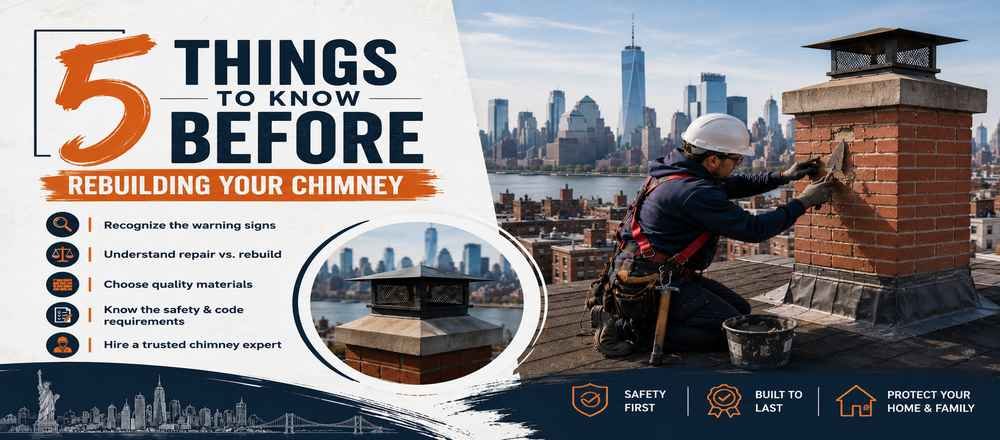
We’ve compiled the five things you should know before you sign anything: if a rebuild is necessary, what it should cost, what your city requires a permit for, what to consider besides the bricks, and how to vet whoever’s doing the work. If you miss any one of these, you are gambling.
1. First, Determine Whether or Not You Even Need a Full Rebuild
Here’s something most contractors won’t tell you: You don’t have to tear down every ugly-looking chimney. Sometimes it does.” Sometimes it really, really does not.
A good licensed inspector should be able to break out your damage into three buckets. Minor repair is stuff like repointing mortar joints, sealing hairline cracks, or swapping out a busted crown—quick, cheap, and done in a day. The most common call is for a partial rebuild, since the top few feet of a chimney take the worst beating from rain, ice, and sun, so that’s where the rebuild usually begins. A full rebuild is a foundation-to-cap project only for chimneys that are truly leaning, on a settled foundation, or fire-damaged.
2. Be Realistic About What This Should Cost
The cost can vary widely depending on the height of the chimney, ease of access, materials you use, and where you are located in the country. Here’s a tip to save you a headache: ask for an itemized quote. Labor, material, scaffolding, and liner work are all broken out separately in writing. Lump sum may appear easier, but it makes comparing bids almost impossible. You want apples to apples.
3. Remember the Permit Conversation
A chimney is a structural and fire issue, and most towns treat it as such, meaning anything more complicated than simple repointing usually requires a permit. Don’t skip it or it can come back to bite you with fines or complications later when you sell and a buyer’s inspector flags unpermitted work.
Call your local building department and ask them, “Do we need permits here for partial rebuilds, or just for full rebuilds?” What are the current height and setback regulations? Is there a mandatory inspection at the liner or flue stage before it all gets capped? And are there any additional material or appearance restrictions if you live in an older home or historic district?
4. Think About Materials
Rebuilding is your opportunity to fix whatever weakness caused the problem in the first place so it doesn’t happen again in ten years. So it is important that you ask about the mortar mix, the liner, the crown and cap. Get these right, and you’re not just patching the old problem, you’re building a chimney that should genuinely outlast the last one.
5. Vet the Contractor as if it were important.
Be sure to look for real certification from a professional chimney sweep or masonry association, not just a website that says they’re “certified.”
Ask for proof of insurance, as you have someone working at height on your structure, so liability and workers’ compensation coverage is a big deal. Get local references and actually call them. Extra points for a rebuild a few years old so you can see how it has held up. Put it all in writing: scope, materials, timeline, warranty, payment schedule.
A chimney rebuild is neither cheap nor pleasant to contemplate. But it’s also a rare opportunity to fix the things that created the damage in the first place: poor materials, ageing liner, improperly installed flashing. Get a real inspection, know your local codes, hire someone who can show you actual work, not just tell you about it. Do this and there is no reason why the rebuilt chimney should not last longer than the one you are replacing.